Lynton built Anaqua's new website on HubSpot CMS from an outside agency's designs
The Customer
Anaqua makes intellectual property management software and services for corporations and law firms. Its product line covers patent and trademark management, docketing, annuities and renewals, IP analytics and a growing set of AI features. Over the years the company had acquired other businesses, and two of them, RightHub and AcclaimIP, still ran their own websites with their own libraries of webinars, guides and posts.
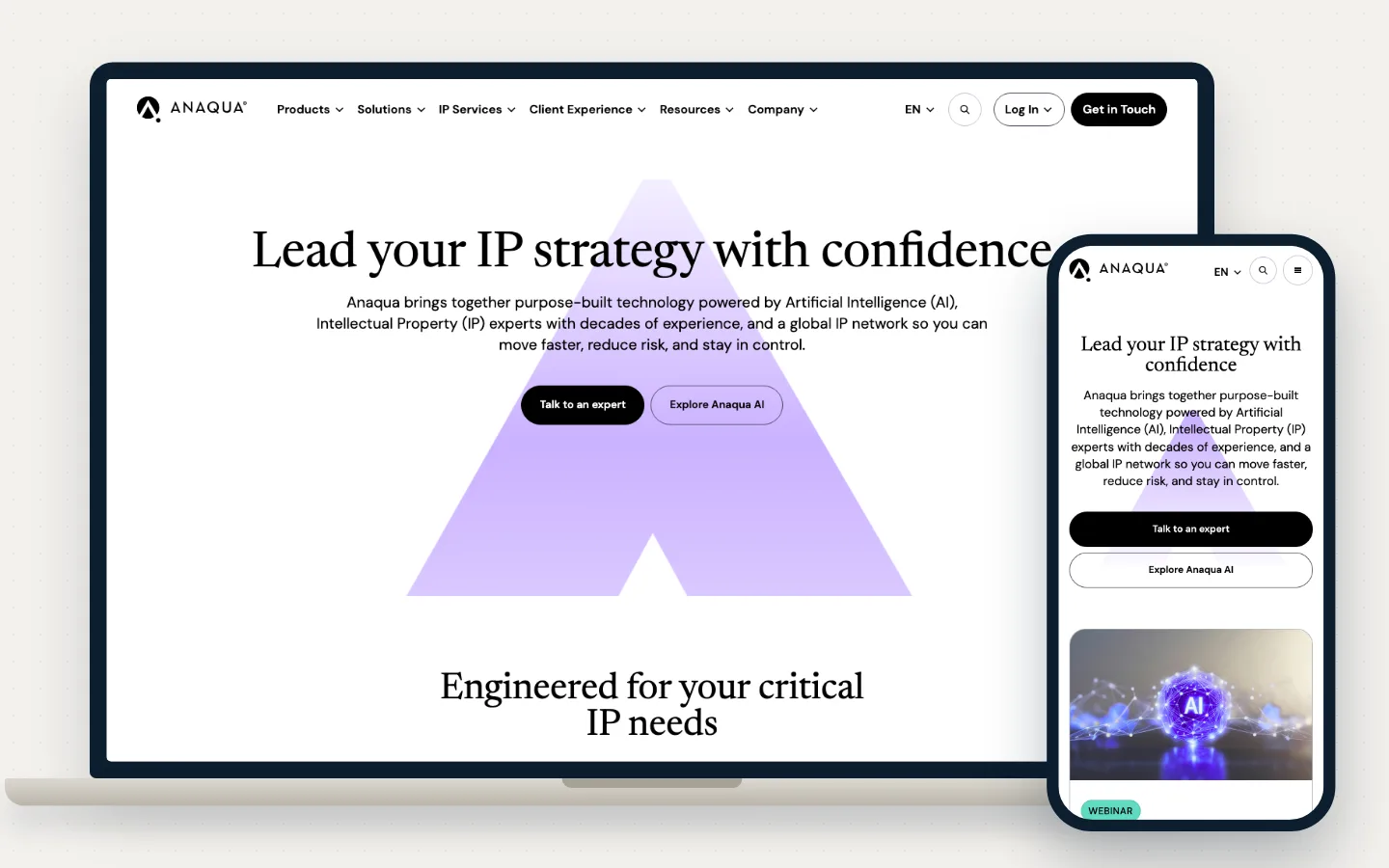
For its new website Anaqua had already chosen a design agency. Clay produced the Figma designs, an illustration system and motion specifications. Anaqua engaged Lynton in February 2026 to build the site in HubSpot CMS, bring the acquired brands’ content into it and get it live.
The Challenge
The first job was fidelity. Another agency had designed the site down to its animations, and the build had to match those files on every page while running on a platform the Anaqua marketing team could edit themselves.
The second was content from three places. The RightHub and AcclaimIP sites were to be switched off when the new site went live, so every resource on them had to find a home in the new library. Nobody on the project had backend access to the RightHub site, so its content had to be gathered from the outside.
The third was language. The site needed Japanese versions of its main pages at launch. An SEO agency on the client side also asked that the resource library’s filtered views have clean, crawlable addresses.
The Solution
We built the site on Lynton’s Starter Theme for HubSpot and restyled every module to Clay’s design system, implementing its variables so the editor’s style controls match the Figma files. The global work covered a header with dropdown menus that changes color depending on the section beneath it, a footer and a style guide page.
The templates followed: homepage, solutions, separate product templates for the RightHub and AQX lines, AI overview, IP platform, IP service, blog listing and post, the resource library listing and single page, and a conversion landing page template with a simplified header and footer.
Clay’s designs called for a set of new modules, so we built them. Feature links and feature tabs, an image card slider, a scrolling slider, a vertical styled accordion, a benefits slider with an auto-advancing progress loader, stacked cards, a bento box, a chevron module, static and scrolling logo modules, and product cards for corporations and law firms with a scroll speed the client sets. A sequenced entrance animation system hooks into the theme’s style tab, with parallax section backgrounds and animated background graphics.
The resource library runs on a single HubDB table. It carries a featured resource slider, filters by type, topic and organization, search, gated resources behind a form, and a call-to-action label set per resource. Its filter parameters use clean, hyphenated slugs, which is what the SEO agency had asked for, and the Webinars, Events and News items in the navigation jump straight into the filtered library through anchor links. The client approved a taxonomy of 11 topics to organize it.
We migrated the Anaqua, RightHub and AcclaimIP resources into that one table with a brand column, using a parse script we wrote for the import and language detection to separate the foreign-language posts. The blog came into the platform’s blog tool, 256 posts in all, with a reading progress bar, an author section, figure and blockquote styles and topic tags on featured images. A speakers table and a blog post speaker module let on-demand webinar posts list who presented.
Content entry ran in three batches, with each page checked against its Figma design before the client reviewed it. Around launch we created Japanese variants of more than a dozen pages under /ja/, with the header, footer and listing filters translated. The site went live on www.anaqua.com in September 2026. After launch we added the case studies section, driven by a Case Studies HubDB table holding 17 studies, with card and testimonial layouts and filters by badge, tag and industry.
What They Got
Anaqua’s marketing team now edits one site in their CRM’s editor, built to the design system their agency specified. The modules Clay drew exist as drag-in blocks with the animations and styling already attached.
One resource library holds the content of three brands. A new webinar, guide or news item is a row in a table, and it shows up in the right filtered views and navigation links. Case studies work the same way.
Japanese-speaking buyers get the main pages in their own language, with translated navigation and filters, on the same site and the same editor as the English pages.
Wrapping Up
The standard on this project was faithfulness to someone else’s design. When a client arrives with finished Figma files, our job is to build what was drawn, page by page, and to make it editable by the people who will run it. The consolidation of three libraries into one followed the same rule, so the acquired brands’ libraries came along with it.
Lynton now builds AI-native websites on open infrastructure; see our current work at /case-studies.