ConnectiveRx grew its HubSpot CMS site with Lynton, from blog template to resource center
The Customer
ConnectiveRx provides patient support services for pharmaceutical brands: hub services, affordability programs, and awareness and adherence programs. Their marketing team runs connectiverx.com on HubSpot CMS, with HubSpot Marketing Hub synced to Salesforce.
When ConnectiveRx engaged Lynton in July 2023, the site ran on a theme a previous agency had built. The team wanted a partner who could keep adding to that site month after month, with real page and module development as well as HubSpot strategy, building on the site they had.
The Challenge
ConnectiveRx had a lot to say and a site that made it hard to say it well. Their blog posts were long walls of text with few calls to action, and their resources were scattered across blog posts, videos and webinars with no single page that brought them together.
They also had pages to add that the existing theme had no templates for: a careers page, a diversity, equity and inclusion page, pillar pages for their core topics, and later a resource center that mixed every content type on one grid. They wanted readers to be able to subscribe to the topics they cared about, and they wanted a way to show their solutions on touchscreen kiosks at trade shows.
All of this had to be built on the existing theme, so their editors kept working in the modules they already knew.
The Solution
Over 2023 and 2024 we extended the existing HubSpot theme one section at a time, and in 2025 we added a kiosk microsite on a subdomain.
The blog came first. We designed and built a new blog post template with a hero that accepts an optional image, a sticky table of contents built from the post’s headings, toggleable author and CTA modules, and a related posts module that lets editors hand-pick up to three related posts and fills the rest automatically. The template went live on the thought leadership section in late 2023.
A pillar page template followed, with a sticky table of contents, image, background color and video options and a bottom form. We moved the two existing pillar pages onto it when it went live in November 2023, and in late 2024 added a sidebar table of contents and a reading progress bar.
For “The Science of Medication” podcast we built a HubDB-driven listing and dynamic episode pages. Guests live in their own HubDB table with name, title, bio and portrait, so a returning guest is picked from a list, with up to four guests per episode and a Wistia video id that overrides the thumbnail.
We added an awards slider to the company story page, with logos that enlarge on hover. The DEI page carries three employee resource group badges, a video slider and a stats module with an animated count. The careers page has floating job-title bubbles that link out when a URL is set, a sticky sub-navigation, animated stats and a perks module. Both pages went live in March 2024.
We also built a drag-and-drop email template with branded header, content, icon row, signature, testimonial and footer modules, and updated the global email footer across their existing templates.
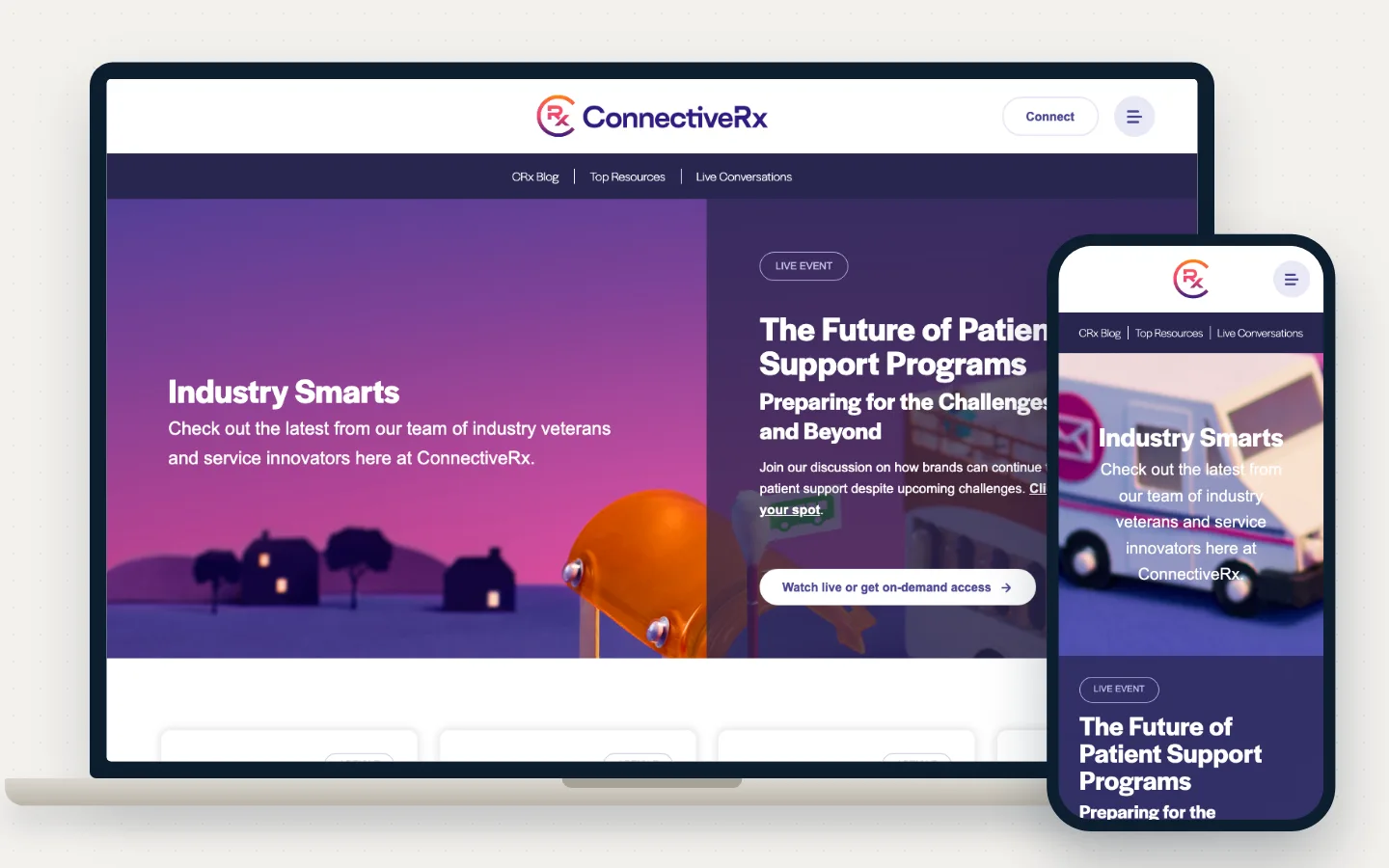
The resource center, “Industry Smarts,” launched on November 4, 2024 at the thought leadership address, with the old blog listing moved to /blog. It runs on HubDB and lists blog posts and resource items together in one chronological grid, with topic and type filters, a featured resource carousel, a video carousel and a featured content card in the hero. We walked the team through HubDB so they could add resources themselves.
The subscription center went live in the same window. We added subscription types and a content preferences property with a radio-select form, a customizable banner module, a redesigned subscribe card on the resources page, an exit-intent pop-up styled to their brand, and an affordability nurture email series with its workflow, delivered as templates for their team to run.
In 2025 we built three Google Ads landing pages for Hub Services, Awareness and Adherence, and Affordability, live on March 14, 2025. Then came the Experience Lab, a microsite for the touchscreen kiosks ConnectiveRx takes to trade shows: a homepage, a patient support video page, an access solutions page, six solution pages and a tagged resource listing, hosted at experiencelab.connectiverx.com. After we wrote up the private-content options, the client chose to gate it by kiosk IP address, so the pages are visible only from their listed addresses.
What They Got
The ConnectiveRx team now publishes on a site that grew with them. Editors write blog posts with a table of contents and related reading built in, publish a podcast episode by picking its guests from a list, add a resource to the center through a HubDB row, and build pillar pages and landing pages from templates designed for their content.
Readers can subscribe to the topics they want, and sales can walk a prospect through every solution on a kiosk at a trade show.
Wrapping Up
On this engagement our standard was to build on what the client already had and ship each section as a finished template their editors could own. Lynton now builds AI-native websites on open infrastructure; see our current work at /case-studies.