FlexGround moved its site from WordPress to HubSpot CMS and kept it as it was
The Customer
FlexGround sells surfacing for playgrounds, sports, aquatics and trails: rubberized and poured-in-place surfacing, synthetic turf, and surface repair and maintenance. Their website ran on WordPress, with a product catalog where each product page carried a detail sheet and a button to a spec sheet.
The Challenge
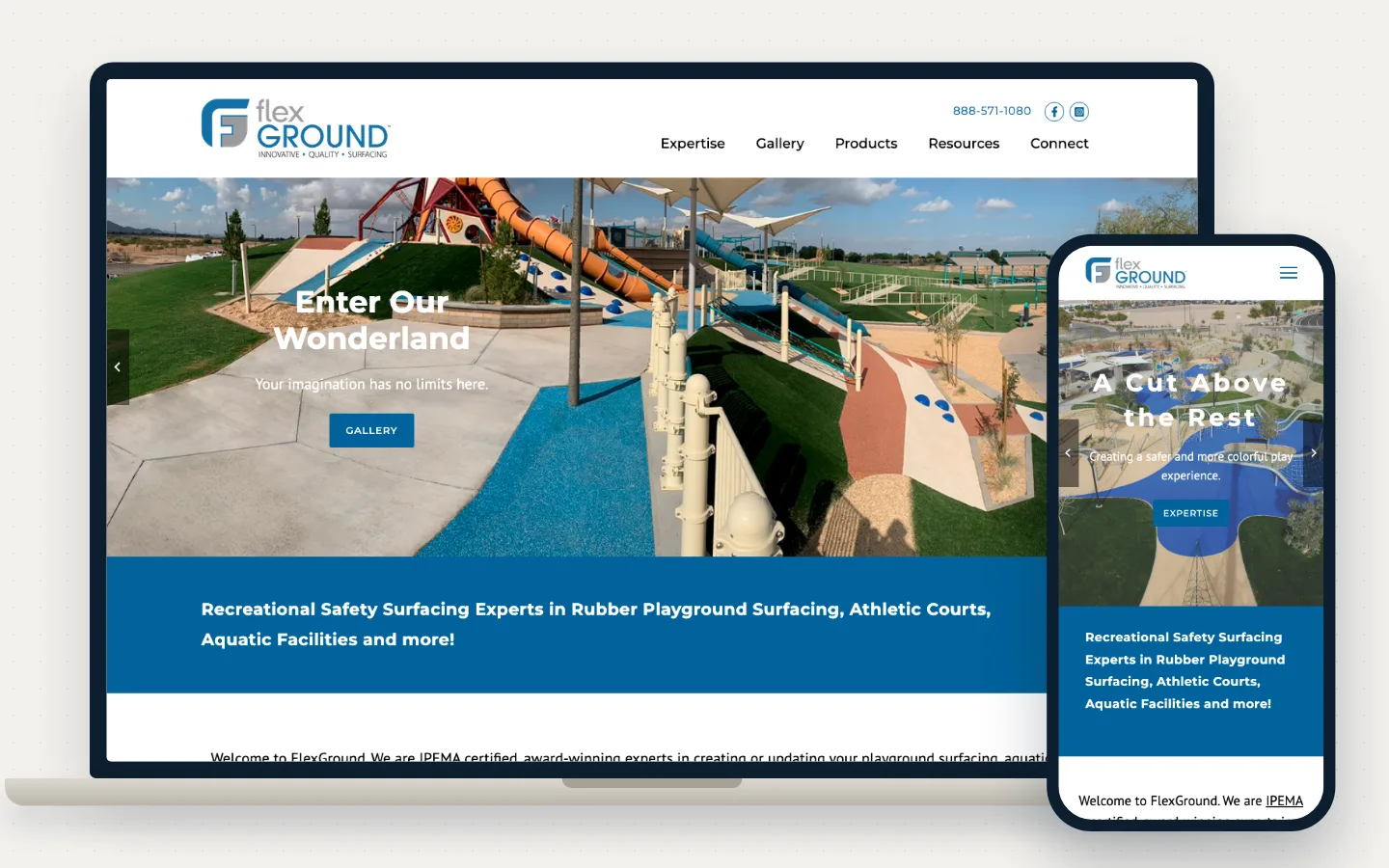
FlexGround wanted the site on HubSpot CMS and wanted it to stay exactly as visitors knew it: the same stylesheet, the same header and footer, the same pages and the same product catalog.
The brief was a straight migration. Every page would be rebuilt on the new platform to match the original, and the products would move into a database with a listing by category and a detail page per product.
The Solution
We copied the global styles, header and footer from the WordPress site into a HubSpot theme, so the new pages inherited the exact look of the old ones.
The pages are built on one flexible inner template with 13 modules. Five were built new for FlexGround: a slider, a filterable image gallery, a pages feed, a parallax background call to action, and a filterable HubDB module. Eight came from the starter theme and were restyled to match the site: a solid background call to action, rich text, a testimonial slider, a hero, rich text with media, anchor links, a contact form and buttons.
The product catalog moved into a HubDB table. A listing page groups products into seven categories: Playgrounds, Rubberized and Poured-in-Place Surfacing, Synthetic Turf Surfacing, Surface Repair and Maintenance, Aquatics, Trails and Sports. Each product’s read-more button opens a detail page with the product name, the detail sheet and a button to the spec sheet. We uploaded each product’s PDF and filled in the table’s embed and specification fields, so the team adds or edits a product in the table and the pages update.
We built 15 pages and entered their content to match the originals, then two more product information pages, one for the east coast and one for the west, after acceptance testing. Before launch we checked the new site against the old one page by page: the original meta descriptions carried over, the contact page matched, and the header dropdowns for Resources and Products matched the original.
On August 2, 2022 we promoted the pages from staging, mapped them to www.flexground.com, and put FlexGround’s own styling on the 404 and 500 pages.
What They Got
FlexGround’s site looks and reads as it did before, and it now runs on HubSpot CMS. The team edits pages in a drag-and-drop editor built from those modules, and maintains the product catalog in one table that feeds the listing and every detail page.
Wrapping Up
Our standard on an as-is migration is that the visitor sees the same site the day after launch as the day before, down to the meta descriptions, and the client gets pages they can edit themselves. Lynton now builds AI-native websites on open infrastructure; see our current work at /case-studies.