Reworld rebuilt its HubSpot website for the move from the Covanta name in under six months
The Customer
Reworld turns waste into energy and runs sustainable waste solutions for communities and businesses. Until 2024 the company was Covanta, and its website ran on HubSpot CMS under that name.
The site held three blogs, a facilities directory kept in three separate HubDB tables for the United States, Canada and Europe, an interactive page comparing waste-to-energy with landfill, and a waste calculator.
The Challenge
Covanta was becoming Reworld, and the website had to carry the new brand on a deadline. The client’s design agency was producing the new design system in Figma, sprint by sprint. Reworld needed a build partner to turn those designs into a working HubSpot theme while the designs were still arriving.
The content had to come with the brand. Three blogs, 60 landing pages with their thank-you pages and forms, the facilities directory and two interactive tools all had to work in the new theme.
The client wanted to launch a minimum viable version first and the remaining pages afterward, so the new name could go live before every page was ready.
The Solution
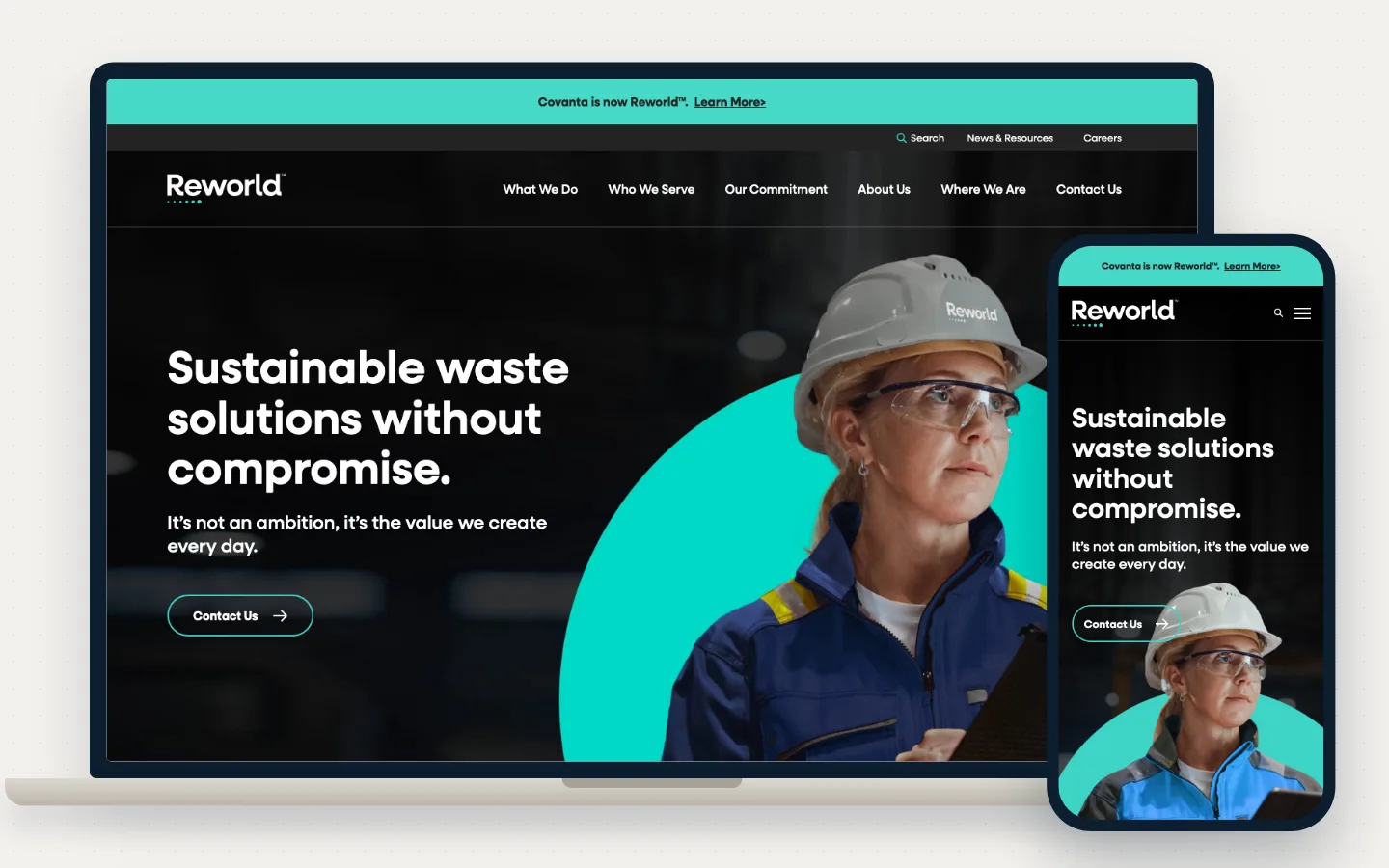
We built a new HubSpot CMS theme from the design agency’s Figma library, developed about 11 templates, migrated the blogs and landing pages, and launched in two phases, with the full site live on April 22, 2024.
Global styles and templates. We set up global styles with light and dark style pages, a header with a search overlay, an announcement bar that can be toggled and made sticky, and the footer and navigation. The homepage template brought new modules: stats with a count-up animation, a dropdown, a testimonial card, page routing, and animate-in options for buttons, text and images.
The design agency presented 17 layouts for the What We Do and About Us pages. We condensed them into fewer templates that cover every layout. The Solutions flex template added a table module with configurable heading and column colors and a logo block. A kitchen-sink flex template serves the Sustainability and Sustainability Report pages. Gated content pages come in two hero variants, with a tags module that links to blog tags or prefiltered resource pages. The Leadership page uses a card grid with a bio pop-up. The blog post template has a drag-and-drop body and toggles for stats, a call to action, social sharing and related posts.
The facilities map. The Facilities Map and List template is a HubDB listing on Google Maps, filtered by state and location type. Each map pin opens an info window linking to the facility’s performance file, its page and its job openings. We added the columns the map needed to the client’s table, and the three regional tables were planned to merge into one, with Canadian provinces listed last. The Facilities Detail template adds a resource list, a phone number repeater in the hero, an anchor navigation, an expandable facility alert and embedded data tables.
Resources and news. The News and Resources listing runs on a HubDB resources table with a featured resources carousel that can play and pause, fed by a featured flag in the table or by manual entries. The blog listing and the resources listing share one module with tag filtering and pagination.
Migration. We migrated the Covanta Blog, Community News and Press Releases to the new templates with an automated process, and imported the Areas of Interest, Solutions and Industries tags. Sixty landing pages moved across with their thank-you pages and the correct forms. The waste-to-energy versus landfill page moved into the new theme with the new header, footer and typography, and the waste calculator module became available in the new templates. A hero section that crops any image into a circle saves the client’s designer from preparing each one by hand.
Phased launch. We defined the MVP redirects, launched the first set of pages in mid April, then put the Phase II pages, header and footer live on April 22, 2024. Content entry was scoped at up to 90 pages, starting with the six MVP pages and 14 facilities pages. We delivered documentation and a one-hour training session.
What They Got
Reworld’s team now publishes on a theme that matches its brand system, with modules built for the layouts the design agency drew. Editors add a facility by editing a table and it appears on the map with its filters and links. Blog posts, press releases and community news live on the new templates with their tags imported. The landing pages, the interactive comparison page and the calculator all carry the new name.
No traffic or lead figures were recorded for this engagement, so we make no claims about them.
Wrapping Up
Our standard when another agency owns the design is to build what they drew and to say so. Every template went through design review, code review and cross-browser testing before launch, and every blog, landing page and tool from the old site came with the brand. Lynton now builds AI-native websites on open infrastructure; see our current work at /case-studies.