Trace One merged Selerant's portal and website into its own after the acquisition
The Customer
Trace One makes product lifecycle management and regulatory compliance software for food, retail and consumer goods companies. It acquired Selerant, whose website we had designed and built on HubSpot CMS the year before.
The two companies arrived with two of everything. Trace One ran its own HubSpot portal and website. Selerant ran a second portal, a second, multilingual website, and kept its deals and some contact data in NetSuite with no integration between the two. Both brands had to keep selling while they became one company.
The Challenge
An acquisition gives a marketing team three jobs at once. The systems have to merge without losing forms, workflows, contact history or deal records. Both websites have to keep working for customers who still search for the old brand. And the merger has to be announced on a fixed day, in front of customers, before the combined website exists.
Trace One also wanted to keep what Selerant had already paid for. The Selerant site carried a resource library, a glossary, a careers board, an ROI calculator and a regulatory coverage map, all built as templates in HubSpot. Rebuilding those from scratch under a new brand would have meant paying for them twice.
The Solution
The work ran in three stages over a little more than a year.
The portal came first, in early 2023. We wrote a migration plan, then recreated Selerant’s contact, company and deal properties in the Trace One portal under their own property groups so nothing collided with Trace One’s existing setup. We rebuilt about 75 forms, moved the entire file manager and design manager, and migrated every web page, landing page, blog post and HubDB table, along with selected automated emails. Selerant’s deals came across from NetSuite into the combined portal. Contacts, companies and their engagement history (notes, emails, tasks, meetings and calls) moved in a one-time multi-portal sync, and an “Integration Source” property kept Trace One’s existing contacts out of the rebuilt Selerant lists and workflows. We then cleaned up every migrated page and email, remapping forms, images, calls to action and PDF links, defined the redirects and relaunched the Selerant website inside the Trace One portal on February 15, 2023. The same engagement produced a lead management pipeline, a lead qualification procedure and Sales Hub training for the combined sales team.
With both brands on one portal, we ran them side by side through 2023. Trace One got two HubDB resource centers (English with videos, and German) modeled on Selerant’s, with seven topic and five type filters. Selerant’s gated resources got landing pages, then French and German variants.
The announcement was the hinge. Trace One declared itself “One Company” at its user conference on September 27, 2023. We built the conference landing page with an agenda module, a venue map, a logo that could be swapped on the day and a hidden, pre-loaded merger video to reveal after the announcement. We built the One Company announcement page with the press release, a 16-question FAQ and a combined customer logo slider. At noon Central that day we changed the Selerant homepage headline to “Selerant is now Trace One”, swapped in the Trace One logo and colors, and pointed the navigation and calls to action at the announcement page.
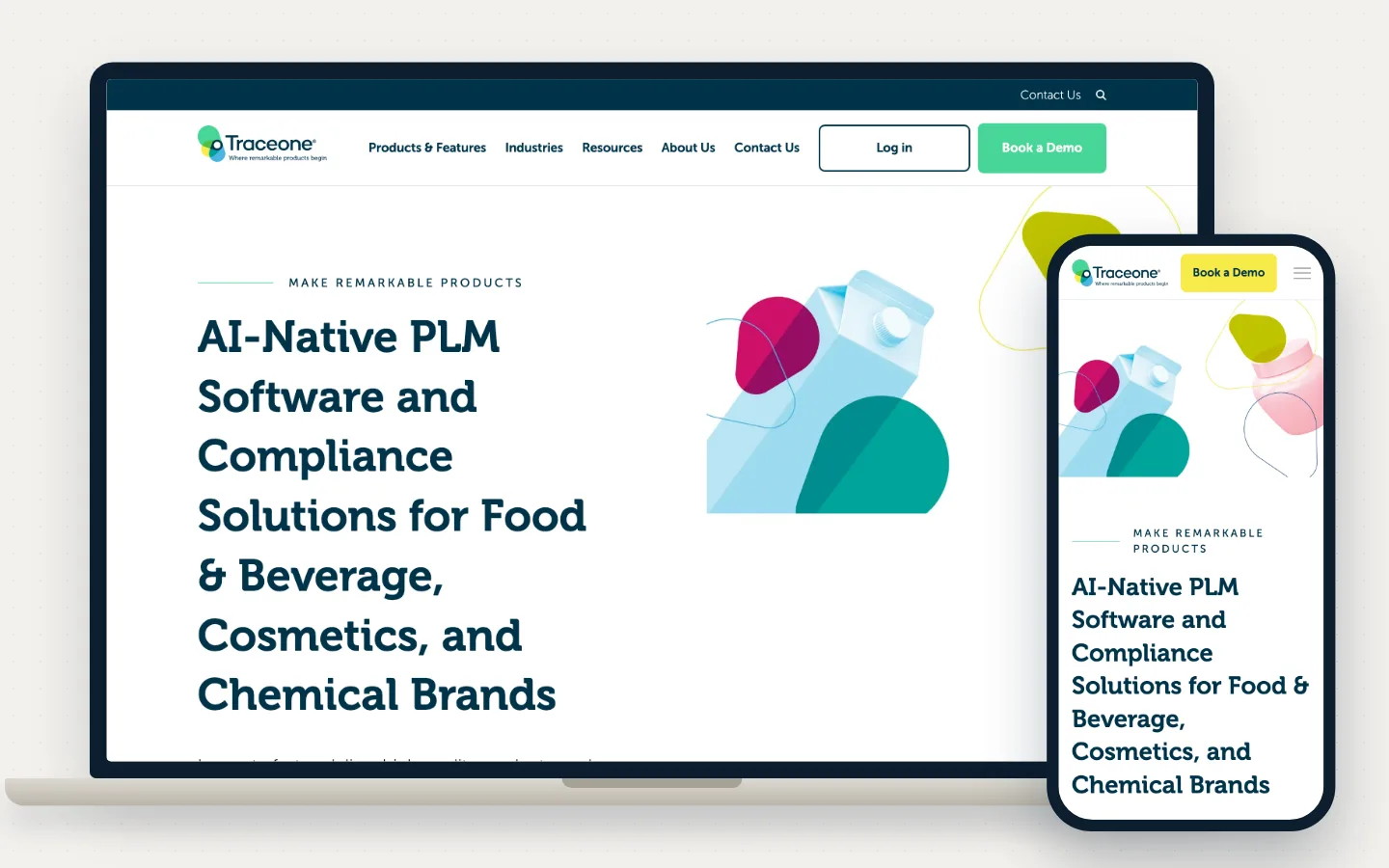
The website merger came last. We kept the Selerant theme, applied new Trace One global styles, a mega menu and footer to it, and restyled its 12 templates: homepage, about, contact, careers, industries, case studies, blog listing, blog detail, glossary, ROI calculator, resources and the coverage map. We designed five product-line styles (PLM, Regulatory Compliance, Insight, Sustainability and Sourcing) so an editor picks a line on a product template and the page inherits its colors. Four modules were new: a product comparison table, a testimonial slider whose cards link to related resources, a terms of service listing and detail built on the blog function so the legal team can update terms themselves, and a 360 View petal diagram with editable text and colors per petal. Smart forms on the contact and demo pages swap in the translated form by the viewer’s country.
We re-entered up to 60 pages of Selerant content into the Trace One templates with new slugs and product names, worked the portal’s 41 case studies into the new templates, re-imported the resources library, and ran a find-and-replace across every blog post to rename Selerant products to their Trace One names. After four rounds of UAT and a redirect map, the merged site launched on www.traceone.com on January 8, 2024. Two months later we consolidated eight Selerant and Trace One blogs into one PLM and Compliance blog.
What They Got
Trace One’s marketing team runs one portal and one website where there had been two of each, and one main blog where there had been eight, with Selerant’s contact history, deals, forms and resource library intact and its old addresses forwarding to the new ones. Editors can recolor a product page by picking its line, publish a legal update without a developer, and serve a visitor the right form in the right language.
Wrapping Up
Our standard on an acquisition is to merge the systems before the brand, keep every address that already works, and reuse the templates and modules the client has already paid for. Lynton now builds AI-native websites on open infrastructure; see our current work at /case-studies.