Case study Specialty alloys · B2B manufacturing
Leaving HubSpot CMS without leaving HubSpot
Carpenter Technology's five websites are moving to code it owns. The CRM, forms and automation stay in HubSpot. On Carpenter Electrification, where we run the marketing, sales-qualified leads grew 24 times over.
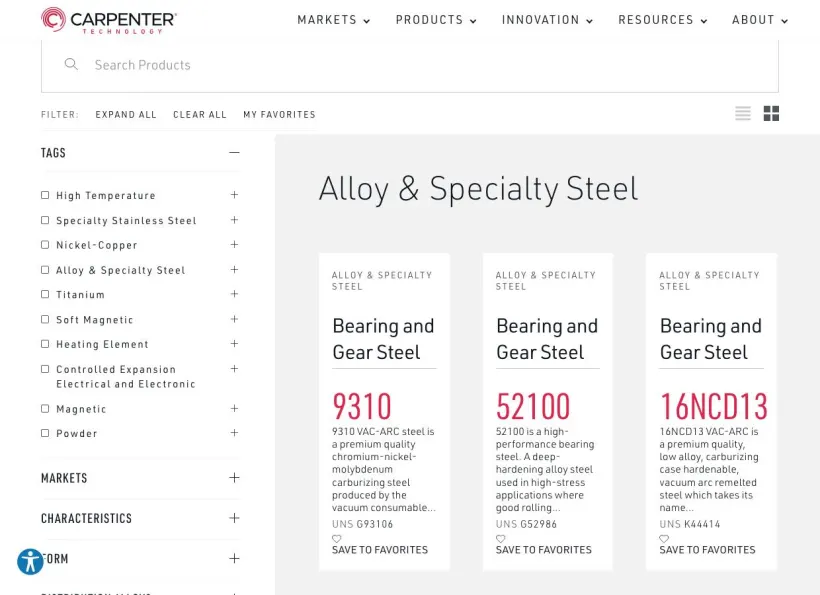
Philadelphia, Pennsylvania · Partner since 2020 · carpentertechnology.com
The short version
Carpenter Technology has made specialty alloys since 1889, for jet engines, surgical implants and electric motors. Its buyers are engineers. We started in 2020 by building the Alloy Finder, the search engineers use to filter Carpenter’s catalog by the properties a design needs. Since then the work has grown into the marketing for Carpenter Electrification, lead generation and sales alignment across three brands, and the rebuild of all five Carpenter websites.
One tool became a partnership across marketing, sales and the web. The Alloy Finder led to the Electrification marketing retainer in 2021, then campaigns, content and CRM work for Technology, Electrification and Additive, and now five websites on one codebase. The same partner for six years, and more of the work each year.
The leads got better, and there were more of them. On Carpenter Electrification, where we run the marketing, sales-qualified leads grew every year from 2020 to 2024, six times faster than website visits did. Sales gets leads it can act on.
Carpenter's websites are moving to code Carpenter owns. Carpenter understood our move to a better way of building websites, and as a large company with sensitive data and clients it was concerned about the security of the framework its sites sat on. All five sites are rebuilt on one codebase and cut over in the coming weeks, with the CRM, forms and automation kept.
Rebuilt on code Carpenter owns
carpentertechnology.com
The parent brand · specialty alloys since 1889
The largest site. The Alloy Finder, the inventory portal where a buyer searches stock by grade, shape and size, the resource library and the careers hub, rebuilt in Carpenter's code with every address kept and every page readable by AI assistants.
- 583
- pages rebuilt
- 309
- alloys in the finder
- 1,723
- stock items in the inventory portal
- 10
- data tables moved
Rebuilt on code Carpenter owns
carpenterelectrification.com
Soft magnetic alloys for motors, generators and actuators
Where the marketing program runs: market pages built around how buyers search, the datasheet membership portal where one sign-up opens every Hiperco datasheet, the gated resource library, and the forms that feed the sales team.
- 215
- pages rebuilt
- 60+
- articles
- 9
- market pages
- 5
- data tables moved
Rebuilt on code Carpenter owns
carpenteradditive.com
Metal powders and additive manufacturing services
PowderRange and custom powders, the PowderHeads community and the online shop, with powder inquiries routed to a specialist sales team.
- 540
- pages rebuilt
Rebuilt on code Carpenter owns
carpenterdistribution.com
Alloys sold from stock to distribution customers
A small site that puts the live inventory portal in front of distribution customers, rebuilt on the same codebase as the others.
- 11
- pages rebuilt
Rebuilt on code Carpenter owns
acerosfortuna.com.mx
Carpenter's distributor in Mexico, in Spanish
The Spanish-language site, on the same codebase with its own look.
- 53
- pages rebuilt
The real problem
Carpenter’s problem moved as the program matured. First the sites had to produce leads at all. Then the leads had to be ones sales would call. Then the question became where the best leads come from and how engineers find Carpenter, and that is where the platform under the five sites ran out of road.
The challenge
The Electrification site attracted visitors and gave them almost no way to identify themselves. The contacts that did arrive landed in a database with no consistent structure, so sales could not tell which ones were worth a call.
What we did
We rebuilt the conversion layer (navigation, page speed and the forms), put a request-a-quote path in the navigation for the highest-intent visitors, and gave every datasheet and gated download the same landing page and thank-you structure so each conversion was tracked the same way. We cleaned and segmented the contact database, launched the gated content program and the quarterly newsletter, and set up the monthly scorecard.
Sales-qualified leads grew 144% in the first year.
The gains came from converting the people already arriving on the site.
SCORECARD EVERY MONTH SINCE
The challenge
More visitors meant more contacts, and not all of them were buyers. Carpenter sells engineered materials on long technical cycles to a narrow set of buyers, so the job was to bring in the right engineers and give them a reason to identify themselves.
What we did
Market pages built around how buyers search, from electric vehicles and electric aircraft to defense, medical and energy. A pillar campaign on why Carpenter Electrification, with its own follow-up sequence. Trade shows run as full campaigns, with a landing page before, content during and a follow-up after. The blog reworked against an audit, product pages given datasheet calls to action, LinkedIn campaigns targeted by job title, and the two portals connected so a contact exists once.
Sales-qualified leads grew 227%, then 167% the year after.
The top of the funnel stayed deliberately narrow.
LEADS SALES CAN ACT ON
The challenge
With the funnel working, the question became where the best leads come from and how engineers find Carpenter. Every datasheet sat behind its own form, and the platform under the five sites had become the limit. The main site took 28.6 seconds to show its main content and loaded 22 outside scripts on every page. Accessibility scored 4 out of 100. None of it could be fixed inside the CMS, because the causes sat in the platform itself. The sites were split across three portals, the license cost about $20,000 a year, and for a company with sensitive data and clients, the security of a framework it did not control had become a real concern.
What we did
The datasheet membership portal, where one sign-up opens every Hiperco datasheet instead of a form for each download. Sales Pro, the sales team's own tools in the CRM, with onboarding and training, and sales alignment across Technology, Electrification and Additive. Then all five websites rebuilt on one codebase Carpenter owns, hosted on Carpenter's own account where its own team can act on security, with almost every page faster than today's, every address kept, and the CRM, forms and automation untouched. They cut over from the old platform in the coming weeks, one brand at a time.
Sales-qualified leads are running ahead of target in 2026, and the five rebuilt sites are faster than today's on almost every page.
Every page is readable by Google and AI assistants, and each site carries a summary written for AI assistants.
FIVE SITES · ONE CODEBASE · CUTOVER NEXT
- 2020The Alloy Finder, built for carpentertechnology.com
- 2021The Carpenter Electrification marketing retainer begins
- 2022Conversion layer rebuilt, a request-a-quote path, the gated content program and the quarterly newsletter; the monthly scorecard begins
- 2023Market pages built around how buyers search, the pillar campaign and its follow-up sequence, the blog reworked, the two portals connected
- 2024Trade shows run as campaigns, product pages with datasheet calls to action, LinkedIn campaigns targeted by job title
- 2025The datasheet membership portal; Sales Pro for the sales team
- 2026Sales alignment across Technology, Electrification and Additive; five sites rebuilt on one codebase Carpenter owns, cutting over brand by brand
What we built
Every custom tool we had built for Carpenter on the old platform, the Alloy Finder, the inventory portal and the datasheet membership tool among them, was rebuilt in code Carpenter owns. Here is the move, then the tools, one at a time.
What the sites stand on
This is what Carpenter's five websites stand on today. Each layer was a reasonable decision on the day it was made. Together they are why the sites are slow, why they are split across three portals, and why Carpenter's own team could not act on their security.
- 01 Theme and templates
- Five brands' layouts, written in the platform's own template language, which only the platform can run.
- 02 Page modules
- Every page assembled from modules in that language, so a page could not leave without being rewritten.
- 03 HubDB tables
- Fifteen tables holding the alloys, markets, specifications, certifications and resources, readable only through the platform.
- 04 Custom apps on templates
- The Alloy Finder, the inventory portal, the datasheet portal and the gated downloads, each built inside the CMS.
- 05 Shared hosting
- The vendor's shared infrastructure, which Carpenter's own team could not act on.
- 06 The license$20,000 a year
- Paid every year, for the right to keep using all of the above.
What Carpenter owns now
Every page, every word, every address and every brand's look comes across at cutover. What changes is the four things underneath, and none of them is rented.
01 The content
1,429 pages as plain files, readable by Carpenter's team, by Google and by AI assistants.
02 The code
One component library on Astro, producing five sites that each deploy on their own. Standard code any developer can work on.
03 The custom apps
The Alloy Finder, the inventory portal, the datasheet portal and the login behind it, rebuilt in Carpenter's code.
04 The hosting
Carpenter's own hosting account, with the CRM, forms and automation untouched.
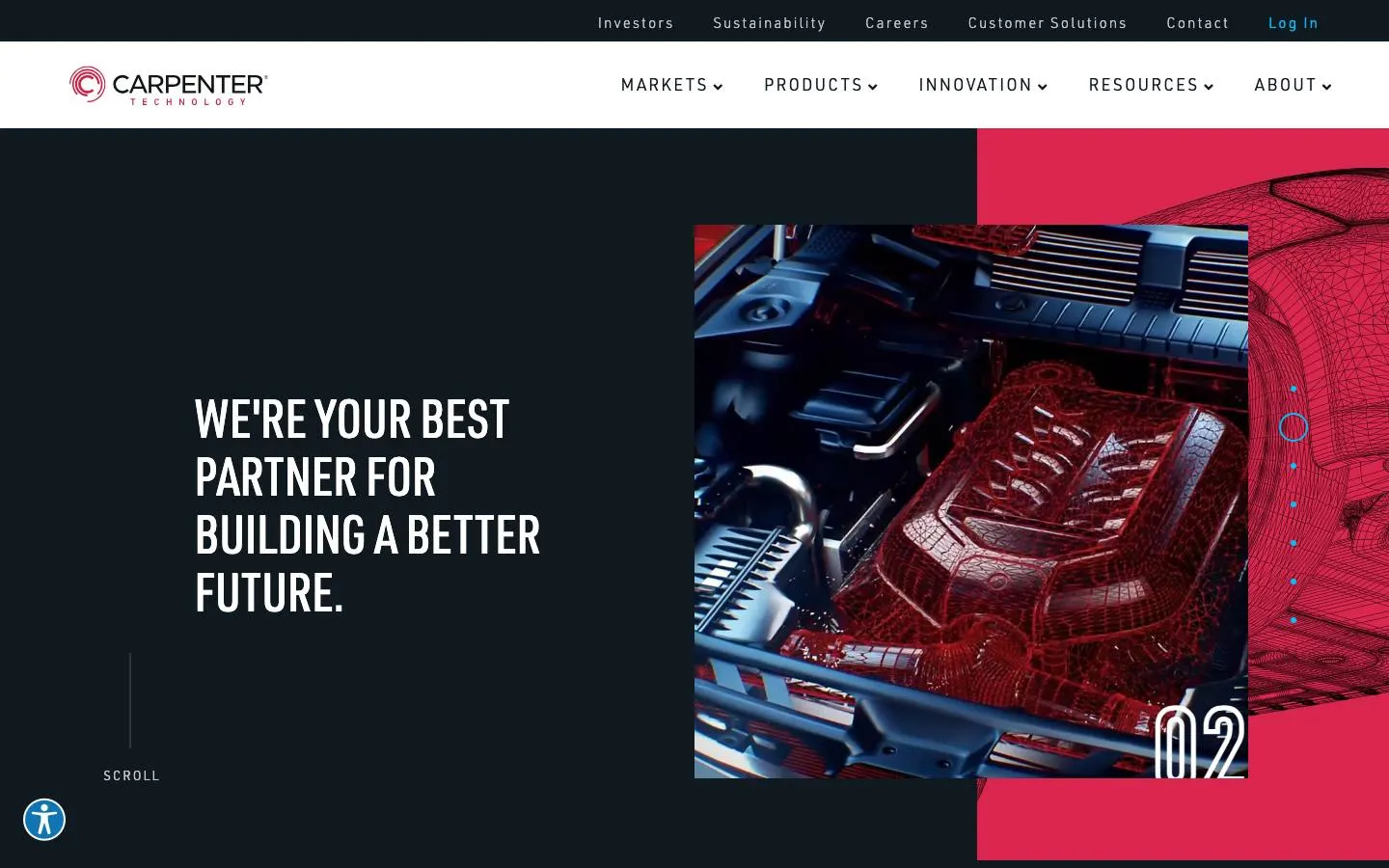
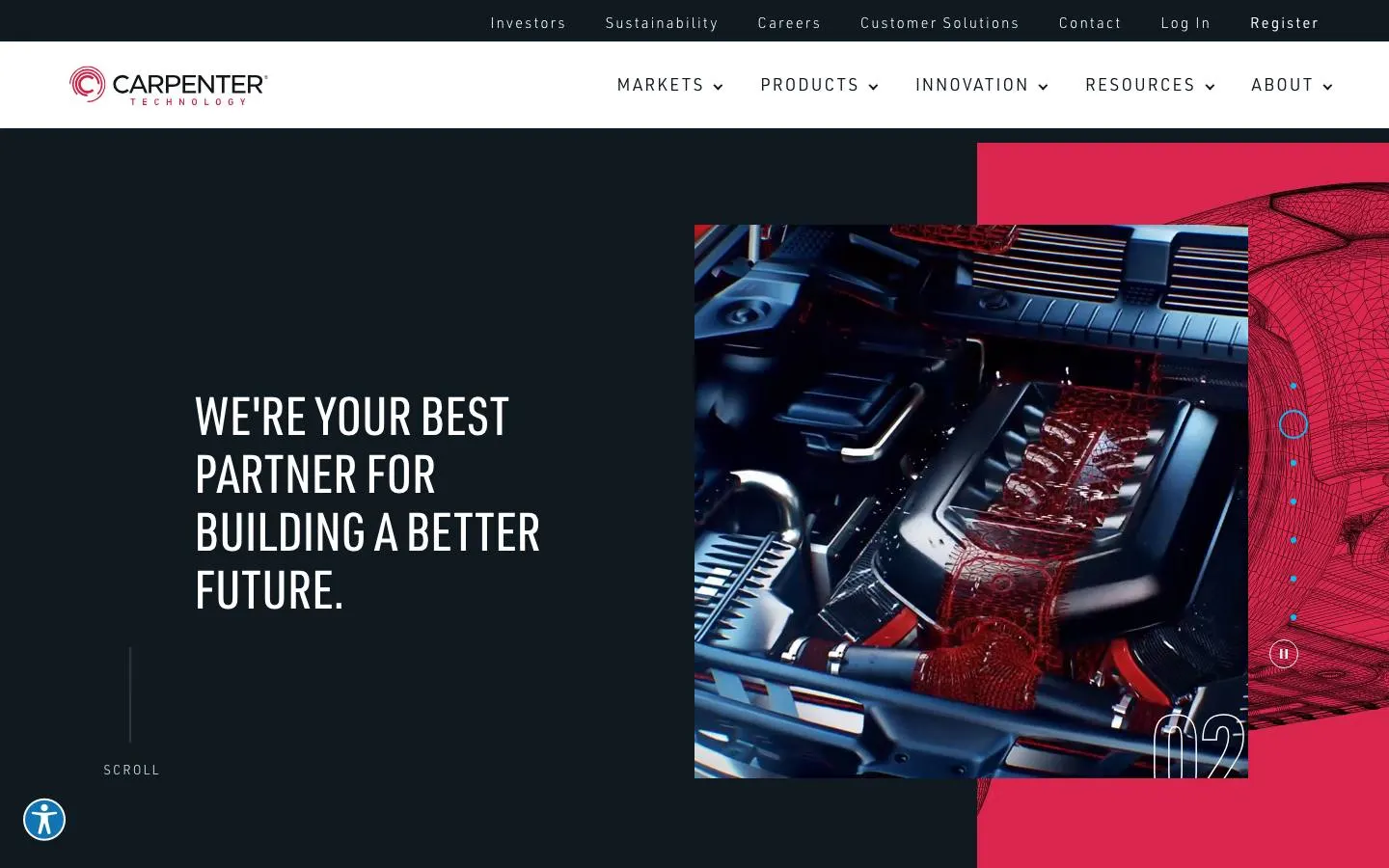
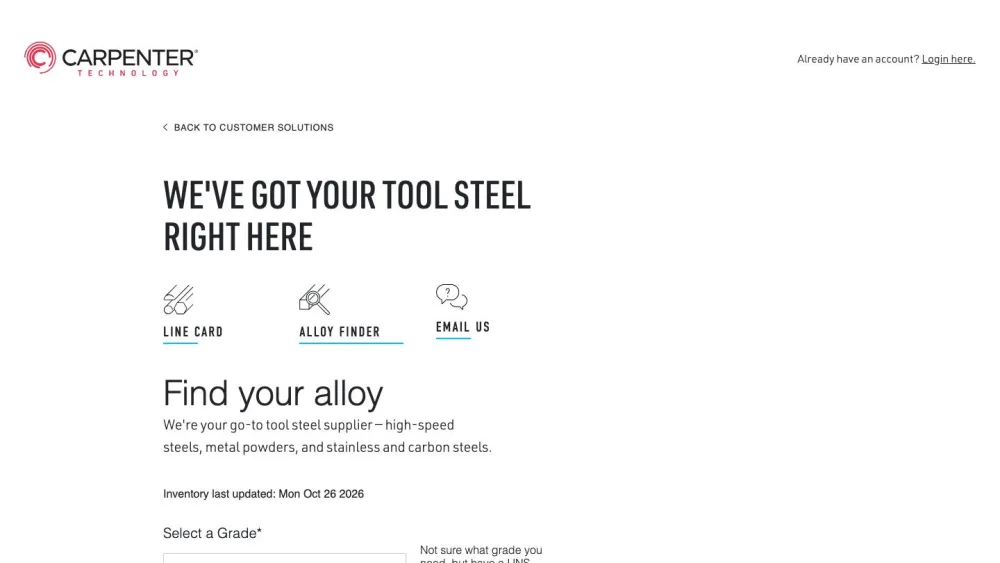
Carpenter’s Alloy Finder lets an engineer narrow hundreds of alloys to the one that fits. You can narrow what we built the same way, one tool at a time.
Before
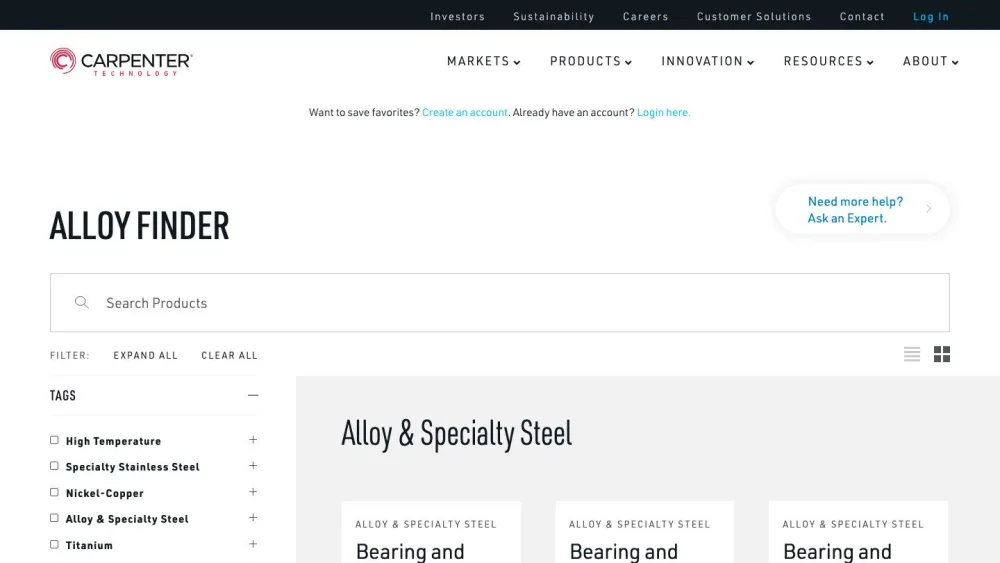
The catalog held hundreds of alloys, and an engineer had no way to filter them by the properties a design needs.
What we built
An engineer filters the catalog by family, market, characteristic and form, searches by name or composition, compares candidate grades side by side, downloads the datasheet and saves favorites for next time. It is rebuilt in Carpenter's code with every alloy page at the same address.
- 64
- subcategories an engineer can filter by
Before
A buyer had no way to search Carpenter's stock from the website.
What we built
A buyer searches Carpenter's stock by grade, shape and size, sees what is available, and sends an inquiry that lands straight in the CRM. It reads from Carpenter's own stock data, and it lives on carpentertechnology.com and is embedded on the distribution site too.
Before
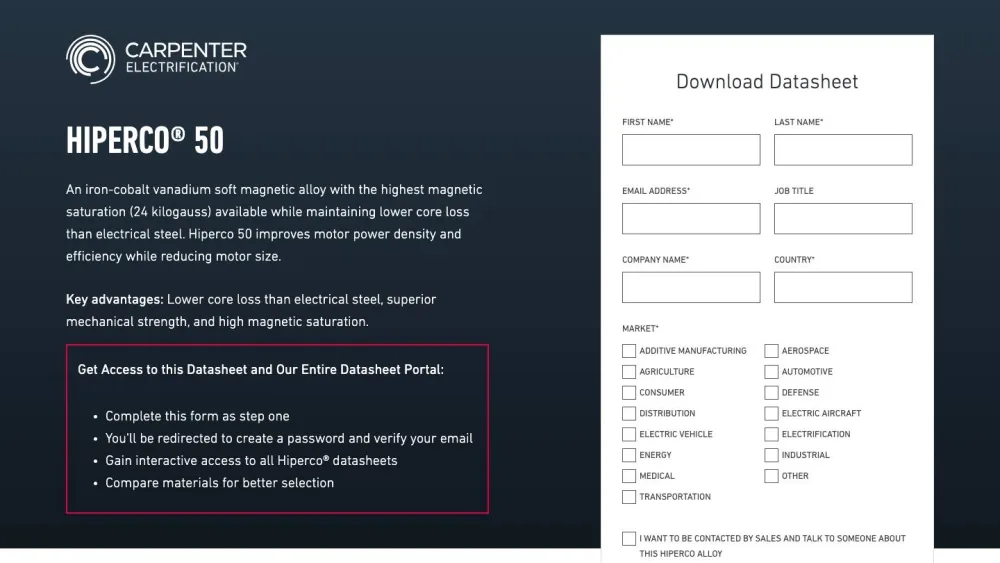
Every datasheet sat behind its own form. An engineer comparing three grades filled in three forms.
What we built
One sign-up opens every Hiperco datasheet. The engineer registers once and reads or downloads any of them from the library, and the membership sits in the CRM, so sales can see who has signed up. The library is what the engineer signs up for. It gives them everything at once, and the ones who then ask for a quote are the ones worth calling.
Before
Resources, certifications and specifications lived in fifteen data tables that only the old platform could read, and the gated downloads depended on the platform's own login.
What we built
The fifteen tables moved into Carpenter's code, so the alloy records, markets, specifications and certifications drive their pages directly. The resource library keeps its open and gated sections, with the login and the protected downloads rebuilt in Carpenter's code.
Before
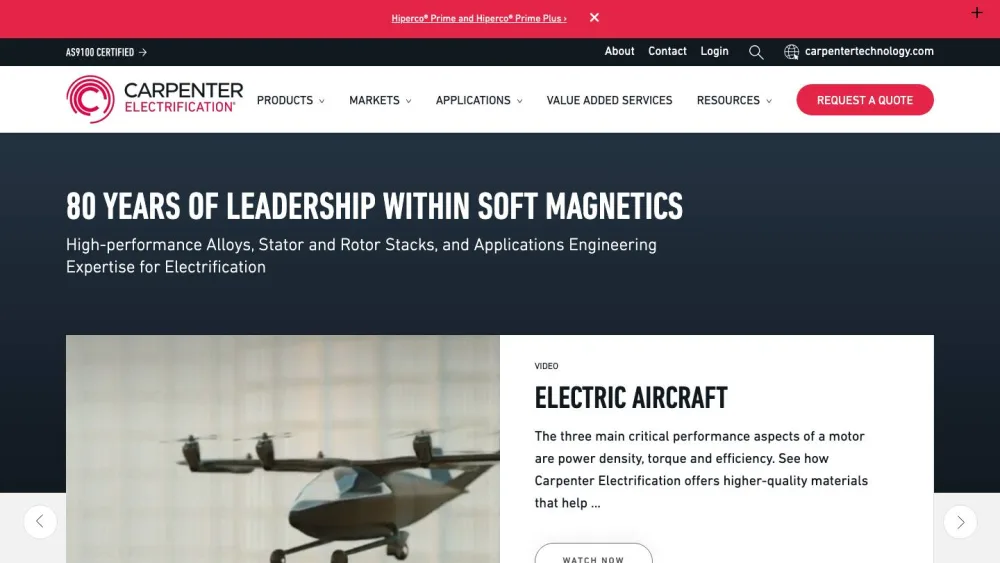
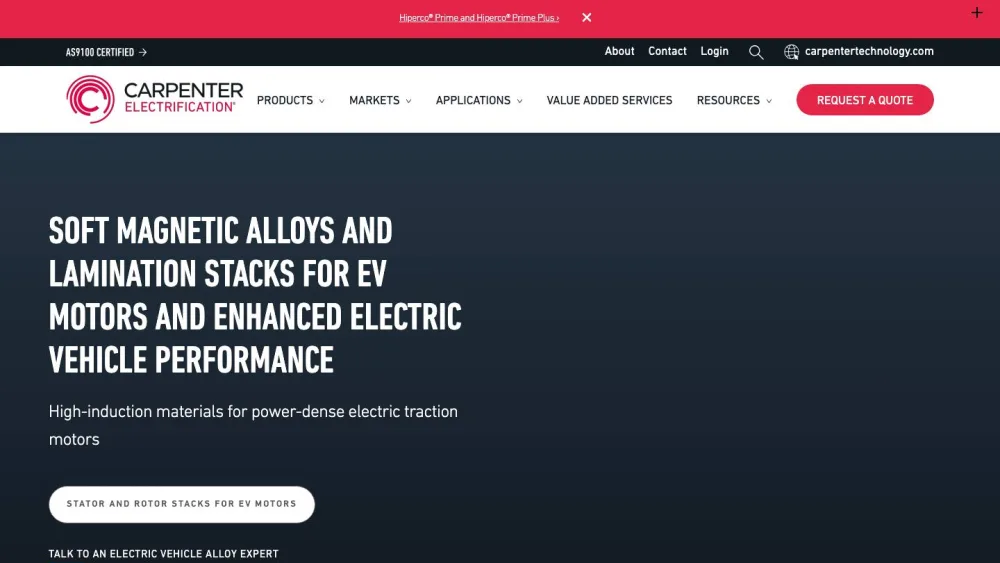
The site was organized by product. Buyers arrive looking for an application.
What we built
Every way a buyer searches has its own market page. Behind them sit the articles, on topics like eVTOL, battery technology and motor design, a newsletter every quarter, and trade shows run as campaigns: a landing page before, content during, and a follow-up sequence after.
Lynton is, hands down, one of the most capable technology and digital marketing partners I've worked with over the course of my 30+ year career.
We started working with Lynton in 2020 and the relationship has grown to multiple projects, each with different levels of complexity. Sara, our key account manager, has supported all our needs perfectly and has been our conduit into a variety of different skillsets and capabilities within Lynton. In my opinion, one of the most telling signs of a great agency partner is when the client doesn't have to worry about the status of ongoing work. Sara (and Lynton) seem to understand that and their communications and management demonstrate it. Lastly, our experience with Lynton goes well beyond my brand and marketing group. Our Sales teams, our IT professionals, and our support representatives have all benefitted from the work Lynton has done for us.
Moving without losing ground
Carpenter’s five sites hold years of web addresses that engineers, distributors and Google rely on. When a page changes address without a redirect, the Google ranking it earned and the links other sites made to it are lost. So every page on the five sites keeps the address it already has: every alloy page, every article, every market page, and the site search. Where an older link already forwards somewhere, it still will.
Old address
carpentertechnology.com/dental
New address
carpentertechnology.com/medical/dental
What changed is underneath. Every address in the five sites’ sitemaps was accounted for, and each of the 2,197 forwarding rules the old platform had built up over the years was checked, with the 1,456 still needed carried into the new sites. Every page was rebuilt through a pipeline that compares it with the original, pixel by pixel and structurally, before a person reviews it. The forms are the same forms, so a submission lands in the same contact record and triggers the same automation it always did. The sites cut over one brand at a time, and the old sites stay up for 30 days after each move, so any page can be put back the same day if it needs to be.
| Layer | Before | After | Status |
|---|---|---|---|
| Website pages | HubSpot CMS, five sites | One codebase Carpenter owns | Moved |
| Alloy Finder, inventory portal, datasheet portal | Built on CMS templates | Rebuilt in Carpenter's code | Moved |
| Hosting | The CMS vendor's shared hosting | Carpenter's own hosting account | Moved |
| Page addresses | As they were | Unchanged | Kept, by design |
| Forms | HubSpot forms | The same forms, into the same CRM | Kept, by design |
| CRM, email, workflows and automation | HubSpot | HubSpot | Kept, by design |
The results
Carpenter Electrification, where the retainer runs, has had a monthly scorecard since 2022. Sales-qualified leads grew every year from 2020 to 2024, and they grew faster than anything above them in the funnel.
The number that matters most is sales-qualified leads, and through September 2026 they are running 17% ahead of the year’s target. The program was built to send sales more of the contacts worth a salesperson’s time.
The rebuilt sites bring their own gains. Measured page by page against the sites they replace, before cutover, they load faster on almost every page, and the accessibility failures that came with the old platform are almost all gone.
In their words
Working with Lynton has been nothing short of exceptional. As a digital marketing partner, they seamlessly integrate with our internal team, acting as a dedicated extension of our brand and marketing efforts.
Communication is flawless, with a level of transparency that fosters clear goal alignment. Lynton consistently goes above and beyond, delivering thorough and insightful results that showcase a deep understanding of our company and industry. Their commitment to meeting deadlines and impeccable project management skills have alleviated stress from our team, allowing us to focus on critical aspects of our business. I wholeheartedly recommend Lynton to any organization seeking a partner that not only meets but exceeds expectations, contributing significantly to overall success.
Questions we get
Q1 Do I have to leave HubSpot CRM to move my website off HubSpot CMS?
No. Carpenter Technology is moving five websites off HubSpot CMS and keeping HubSpot for its CRM, forms, email and automation, because they work and the sales team lives in them. The new sites use the same HubSpot forms, so each submission lands in the same contact record it always did, the same workflows run, and the tracking cookie carries across. The website moves and the customer records stay where they are.
Q2 Can a manufacturer run several brand websites from one codebase?
Yes. Carpenter Technology's five brand sites are built from one component library with each brand's own colors and type, and each site deploys on its own. The shared parts, like the mega-menu and the resource library, are written once. The 15 data tables that drive the alloy records, markets, specifications and certifications moved into the same codebase. One codebase does not mean one website. Each brand keeps its own look, and a change to one site does not have to touch the others.
Q3 Will moving a website off HubSpot CMS hurt its Google rankings?
It can, if pages change address without a redirect, because the ranking a page earned stays with its address. For Carpenter Technology's five sites, every page keeps its address: alloy pages, articles, market pages and the site search all stay where they are. Every address in the five sitemaps was accounted for before cutover, and each of the 2,197 forwarding rules HubSpot had built up over the years was checked, with the 1,456 still needed carried into the new sites.
Q4 How can an industrial manufacturer's website produce leads sales can act on?
Build it around how engineers buy. Give the highest-intent visitors a direct path, like a request-a-quote link in the navigation. Give every datasheet and gated download the same landing page and thank-you structure so each conversion is tracked the same way. Write pages for the markets buyers search for, and offer tools an engineer can use, like an alloy finder and a datasheet library behind one sign-up. On Carpenter Electrification, website visits grew 3.7 times from 2020 to 2025 while sales-qualified leads grew 24 times, and through September 2026 sales-qualified leads are running 17% ahead of the year's target.
Q5 How should engineers find the right alloy on a supplier's website?
By the property they need, as well as by the grade name they happen to know. Carpenter Technology's Alloy Finder covers 309 alloys and lets an engineer filter by family, market, characteristic and form, search by name or composition, compare candidate grades, download the datasheet and keep a favorites list. We built it in 2020, where our work with Carpenter began.
Q6 What does HubSpot CMS cost a manufacturer with several websites?
Carpenter Technology paid about $20,000 a year in CMS licensing for its websites, separate from what it pays for HubSpot CRM. That license ends at cutover, when the sites move to code Carpenter owns, hosted on Carpenter's own hosting account. The CRM, forms, automation and email subscriptions continue as before.
Q7 Can my team update the websites without a developer?
Yes. On the three Carpenter brands the marketing team will edit, each site has a simple editor on a headless CMS. An editor saves a change as a draft, reviews it on a preview of the site, and publishes it, and the site rebuilds itself. Carpenter owns the code and can take it anywhere, with no per-seat licenses for the websites.
See how your website scores before you change anything.
Our free assessment grades your site on speed and on how well Google and AI assistants can read it. It's where Carpenter's migration started, and it takes about a minute.