Case study Podcast · personal brand
Peter Lazaroff's podcast now answers listeners' questions
We moved his podcast and articles off WordPress onto one site, with an AI search across every episode. All 273 episodes came through, and so did his search traffic.
The short version
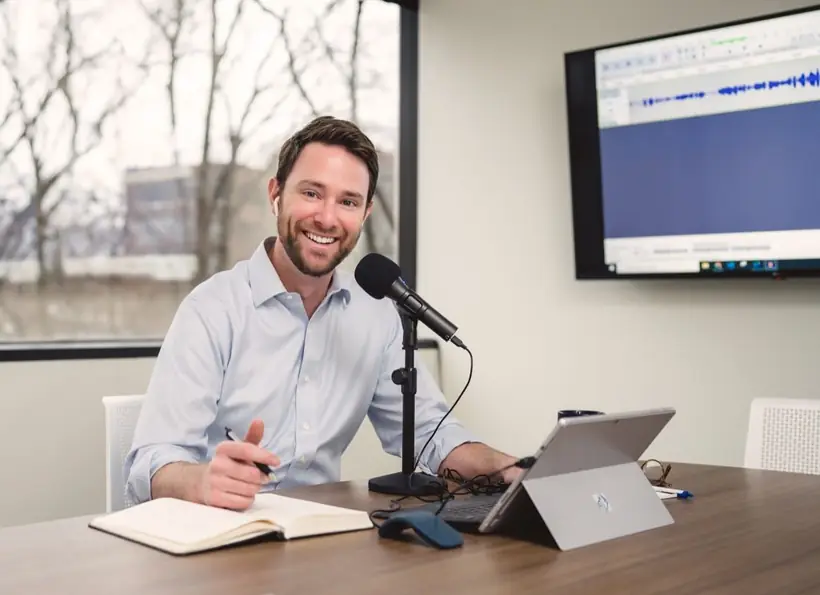
Peter Lazaroff hosts The Long Term Investor podcast, has written two books on personal finance and is the Chief Investment Officer of Plancorp. Years of episodes and articles had built up on a WordPress site that made them hard to find.
Everything is on one site now. His articles and episodes ran on WordPress, and his book, newsletter and booking pages sat on Leadpages, at an address he didn't own. We brought all of it onto peterlazaroff.com.
Listeners can ask the podcast a question. An AI search reads the show notes of every episode and brings up the episodes that best match what a listener types. New episodes join it on their own.
New episodes publish themselves. His team writes the episode in a simple editor and picks a time, and the page goes live on its own, player and all. For bigger changes, they ask an AI site agent in plain words.
Live · 3 September 2026
peterlazaroff.com
St. Louis, Missouri · home of The Long Term Investor podcast
One website for his podcast, his articles and his books.
- 273
- podcast episodes moved
- 136
- articles
- 22
- podcast series
- 19
- article topics
What was getting in the way
Peter’s podcast and writing were the strongest things about the site, and both kept growing. Three things held the site back.
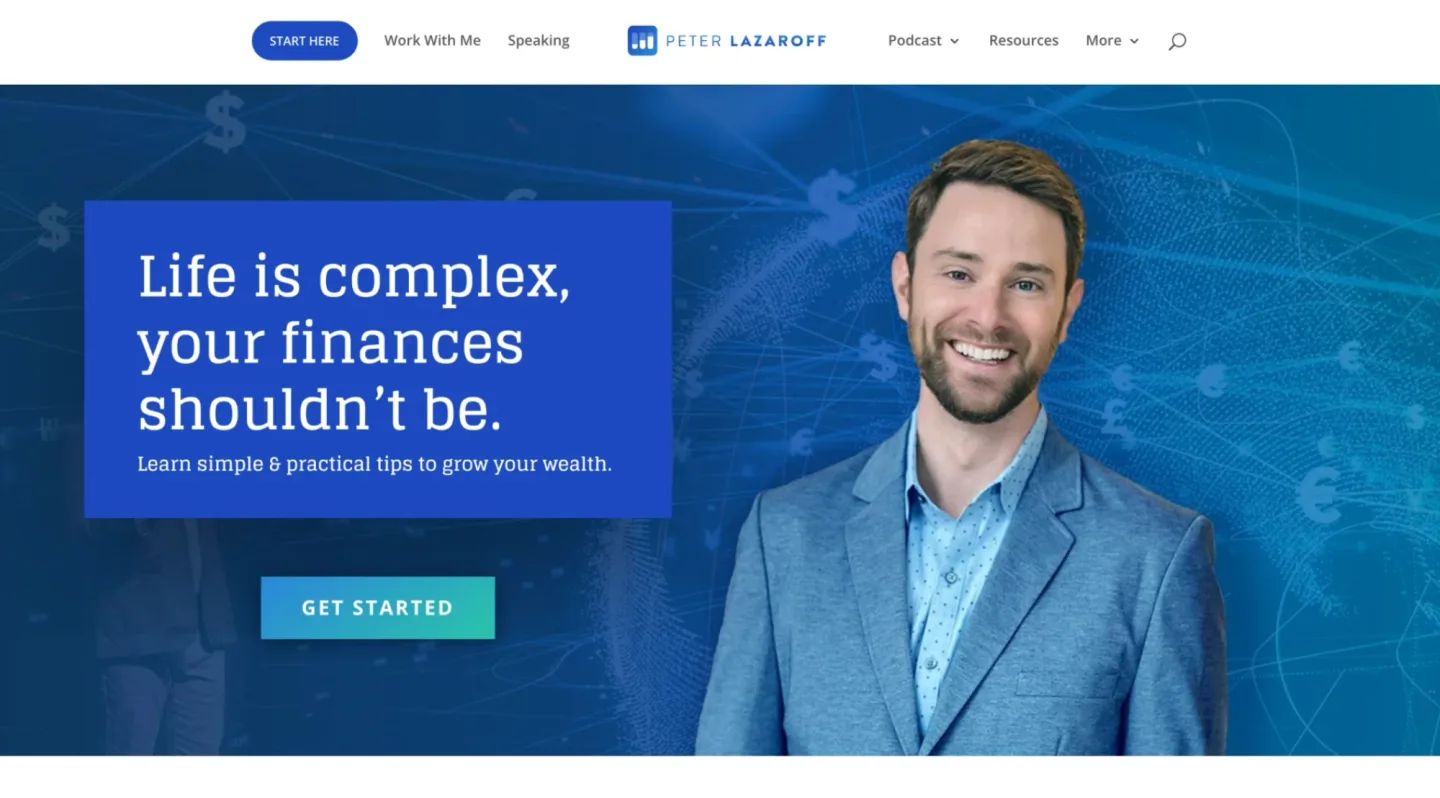 BEFORE · OLD SITE
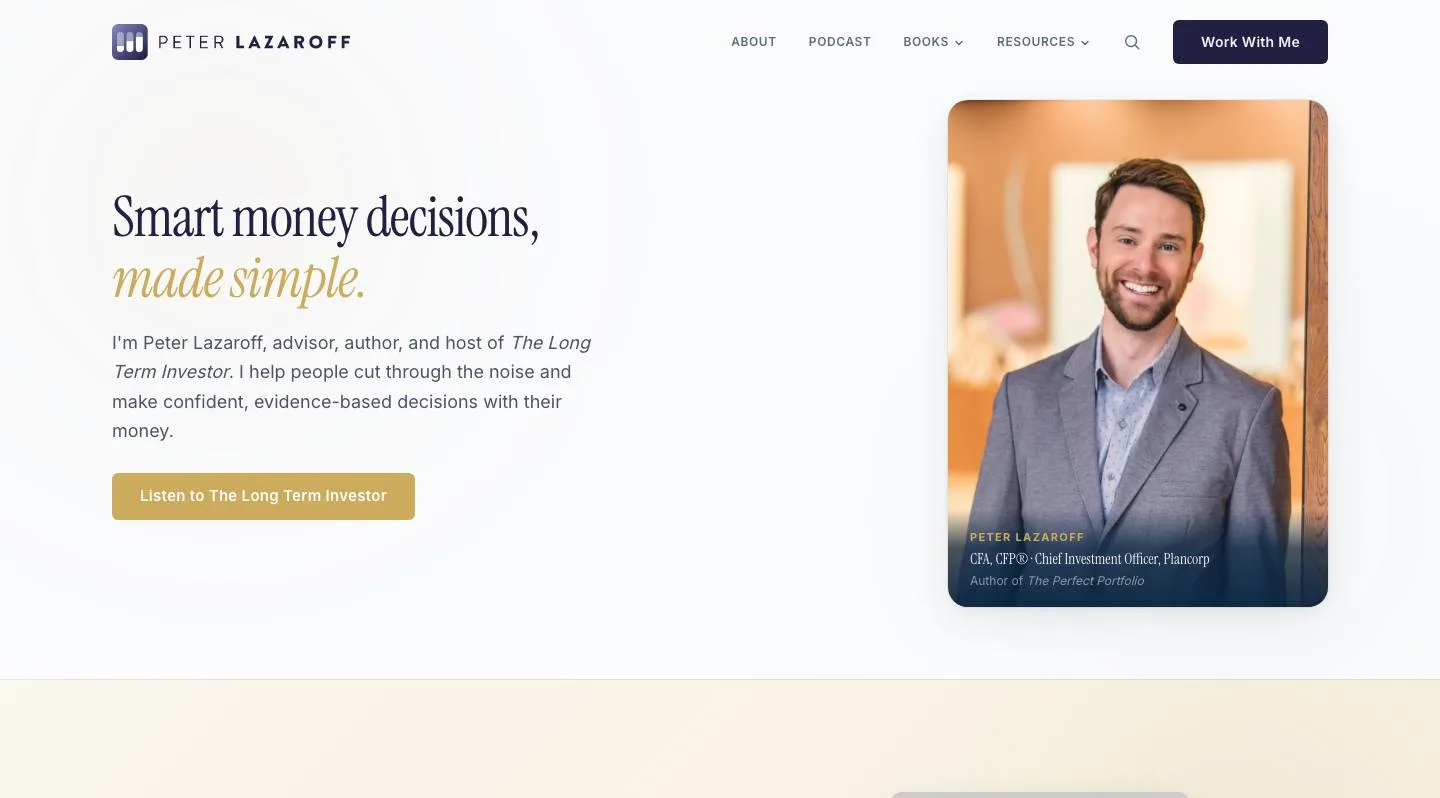 AFTER · THE NEW SITE
Ask the podcast anything
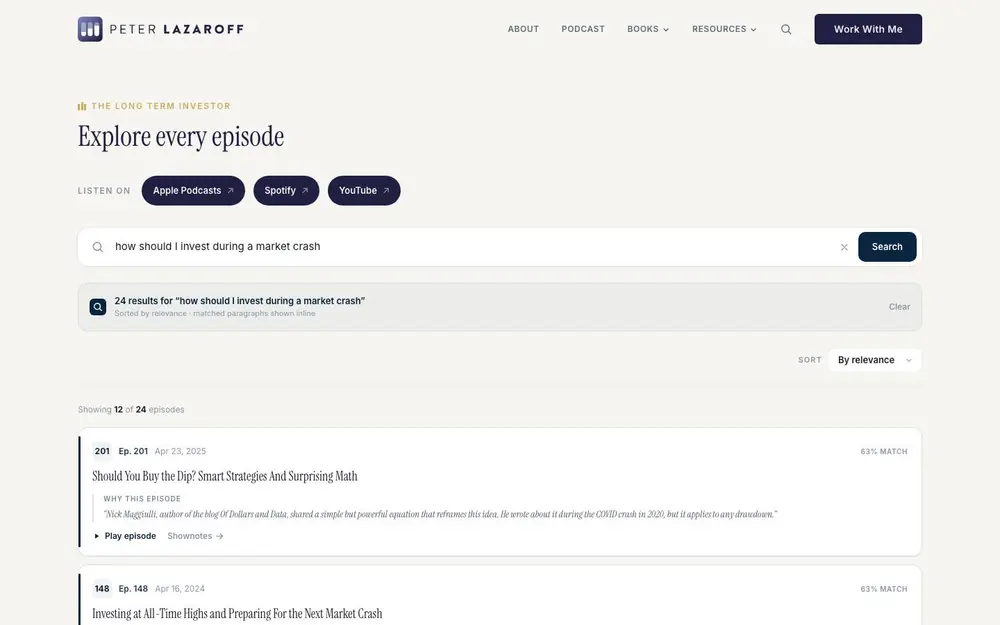
Since 2021, The Long Term Investor has built up hundreds of recorded answers to money questions. The old site listed them newest first. The new one lets a listener type the question on their mind and brings up the episodes that best match it.
It reads the show notes of every episode. Every result is one of Peter’s episodes, shown with the paragraph that matched, so a listener can see why before pressing play. Asked how to invest during a market crash, it put Should You Buy the Dip first. Asked how to bake sourdough bread, it brought up nothing.
New episodes join the search on their own. The three newest, published in October, each come up first when you ask about their topic.
Episodes that publish themselves
Before, someone had to put each new episode live by hand at the right moment, and its page had no player until Apple Podcasts or Spotify had the episode. Now his team writes the episode in a simple editor, pastes in the player code from Libsyn and picks a time. The site checks every hour and puts the episode live on its own at that time, with the player already working.
The episode’s address is fixed in advance, so the newsletter can link to it before it goes live. It took most of the hands-on work out of publishing a new episode, and his team has published from the editor since launch.
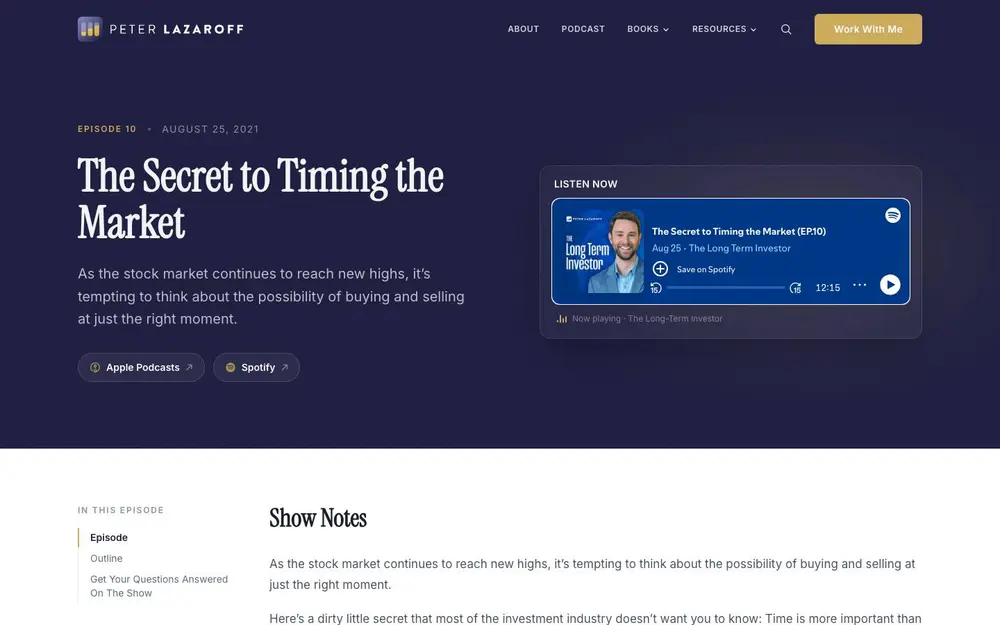
Before
Years of episodes in one long list, and an episode page that was a player above a wall of notes.
What we built
Every episode came across, grouped into series by theme for the first time. The episode numbering has no gaps, which we checked by reading every file. Episode pages lead with the player, outline the episode and point to the next one.
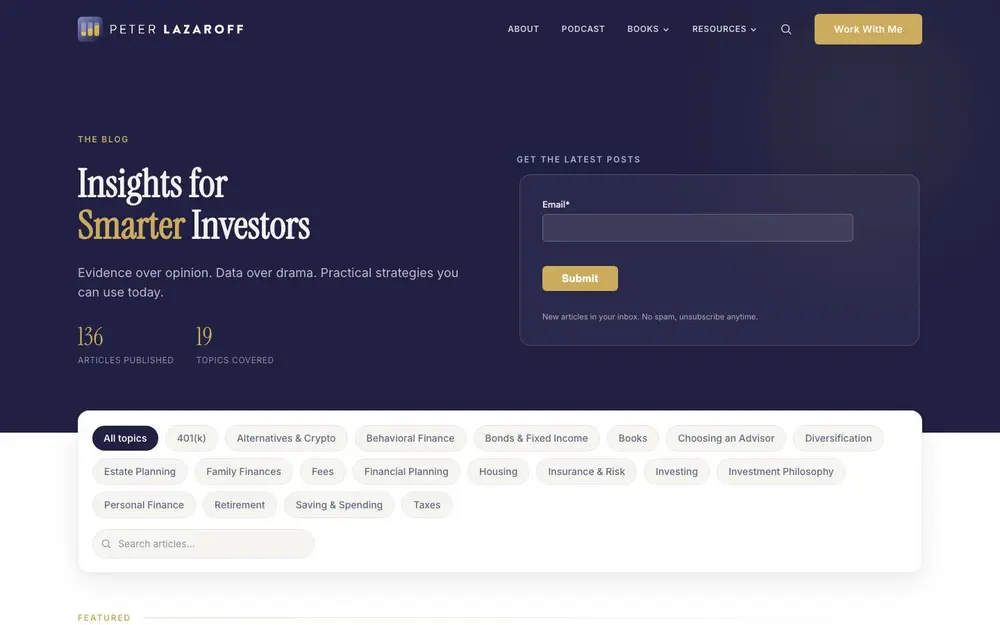
Before
Years of articles filed two ways at once, under categories and under tags, so the same subject had two front doors with different articles behind each.
What we built
Every article came across, and the two filing systems became one set of topics a reader can browse or search. Each article now has a table of contents that follows you down the page, related reading and a newsletter sign-up in the flow of the text.

Before
His book pages, newsletter sign-up, booking page and their thank-you pages sat on Leadpages, each with its own look.
What we built
All seven are pages on his own site now, in the same design as everything else. Five worksheet downloads each got a page of their own, and the booking page keeps his calendar on his site.
Before
The old WordPress site plus a separate Leadpages account, each managed on its own.
What we built
Peter owns the code and can take it anywhere. His team updates articles and resources in the same editor and previews each change before it goes live. For bigger changes, they ask an AI site agent in plain words. His forms still send to HubSpot: eight forms across the site and two follow-up email sequences. Hosting costs $20 a month, and there are no plugins to keep updated.
Moving without dropping an episode
Peter’s articles and episodes had earned links from other sites, places in Google results and listings in podcast directories. Our job was to carry across everything his own domain had earned, because a page that moves without a forwarding address loses what it earned.
Our standard is to keep every address that already works. We move a page only when the new address is better for readers and for Google, and the old address then forwards to the new one, so what it earned goes with it. We map every planned move before launch.
Old address
peterlazaroff.com/tag/401k
New address
peterlazaroff.com/blog/category/401k
For Peter, three kinds of address changed. The blog’s categories and tags each forward to the one topic that replaced them. The seven Leadpages pages now live on his own site. And 29 old partner pages were retired, and their addresses forward to his Work With Me page, so anyone following an old link still lands somewhere useful. The episode pages didn’t move at all.
Before launch, we checked that every forwarding address landed on the right page, and spot-checked pages in a real browser for missing content, errors and broken images.
What changed after launch
We compared the new site’s first 30 days with the old site’s last 30, using Google’s own search data. The clearest change is how much of the site Google shows. More than 1,000 different pages from his site now appear in its results, up from 441, helped by the new series and topic pages. Each one is another way for someone searching a money question to find his show.
Clicks from Google rose too, though his clicks rise every autumn, and the same weeks a year earlier rose by more. His new book, The Perfect Portfolio, also launched in this window. What the move shows is that his search traffic came through the switch intact: his first month on the new site brought slightly more clicks than the same weeks a year earlier.
Google’s speed report rates all 186 pages it measures on the new site as a good experience on phones and on desktop. In August it listed the old site’s pages as needing improvement. His top pages in Google since launch are the homepage, the podcast page and the book page: people arrive to size him up, to find the show and to find the book.
Since launch, two in three sign-ups have been for a free download: a worksheet or the book’s bonus chapters.
In Peter's words

I can't strongly enough recommend working with Lynton. I've worked with a number of different marketing agencies over the years, but I've always felt that service and/or deliverables routinely fall short of expectations. Then I started working with Lynton and suddenly I found a reliable marketing partner.
They are also very metric driven, so I'm able to quantitatively assess the success of our activities. Their team is highly responsive to our one-off requests and proactive in raising issues/ideas for improvements. They've been an absolute pleasure to work with.
Questions we get
Q1 Can visitors search a podcast by asking a question?
Yes. Peter Lazaroff's podcast page searches the show notes of every episode and brings up the episodes that best match a listener's question, each with the paragraph that matched. Asked how to invest during a market crash, it put the episode Should You Buy the Dip first. Asked how to bake sourdough bread, it brought up nothing. New episodes join the search on their own.
Q2 Do I have to change podcast hosts to get a new website?
No. Peter Lazaroff's show stayed on Libsyn, and his feed and his Apple Podcasts and Spotify listings were not touched. The website is separate from the podcast host. It gives every episode its own page, with the show notes and a player.
Q3 Can my team publish a new episode without a developer?
Yes. Peter Lazaroff's team writes each episode in a simple editor, pastes in the player code from Libsyn and picks a time. The episode page goes live on its own at that time, with the player working, even before Apple Podcasts and Spotify list the episode. For bigger changes, they ask an AI site agent in plain words. Peter owns the code and can take it anywhere.
Q4 Will moving my website off WordPress hurt my Google rankings?
It can, if pages move without a forwarding address (a redirect), because the ranking and the links a page earned stay with its address. Our standard is to keep every address that already works, move a page only when the new address is better, forward every page that moves, and check every forwarding address before launch. For Peter Lazaroff, 778 old addresses forward to their new pages and his episode pages kept their original addresses. His first month on the new site brought slightly more clicks from Google than the same weeks a year earlier, and Google now shows more than twice as many pages from his site.
Q5 Can a podcast archive move off WordPress without losing episodes?
Yes, when the move is checked against the full archive. We moved all 273 episodes of The Long Term Investor off WordPress, kept each episode's address, and read every episode file to confirm the numbering ran from 1 to 273 with no gaps.
Q6 Should my book, newsletter and booking pages be on Leadpages or on my own website?
On your own website. A page on a landing-page service sits at that service's address, so the links and visits it earns build up someone else's domain. Peter Lazaroff had seven such pages on Leadpages. We rebuilt all seven on peterlazaroff.com in the site's own design.
Q7 Can I keep my email list and sign-up forms when I move my website?
Yes. Peter Lazaroff kept his forms, contacts and follow-up emails in HubSpot, the tool he already used. The new site's eight forms send into it, and two follow-up email sequences run from it. We rebuilt the website and left his list where it was.
Find out what moving your site would take.
Tell us where your episodes, articles and sign-up pages live today. We'll walk you through what would move, what would keep its address, and how your team would publish.